Expert TPMS Service in Oklahoma City, OK

Ensure your safety with accurate tire pressure monitoring—book your TPMS service today!

Our TPMS Services: Maintaining Optimal Tire Performance and Safety

Keep your tires in top condition with our professional TPMS services. A properly functioning TPMS not only helps extend tire life but also improves vehicle handling, decreases braking distances, and increases fuel efficiency. Schedule your TPMS check today to ensure your system is accurately monitoring tire pressure and alerting you to any potential safety issues.

Expert TPMS Diagnostics & Repair

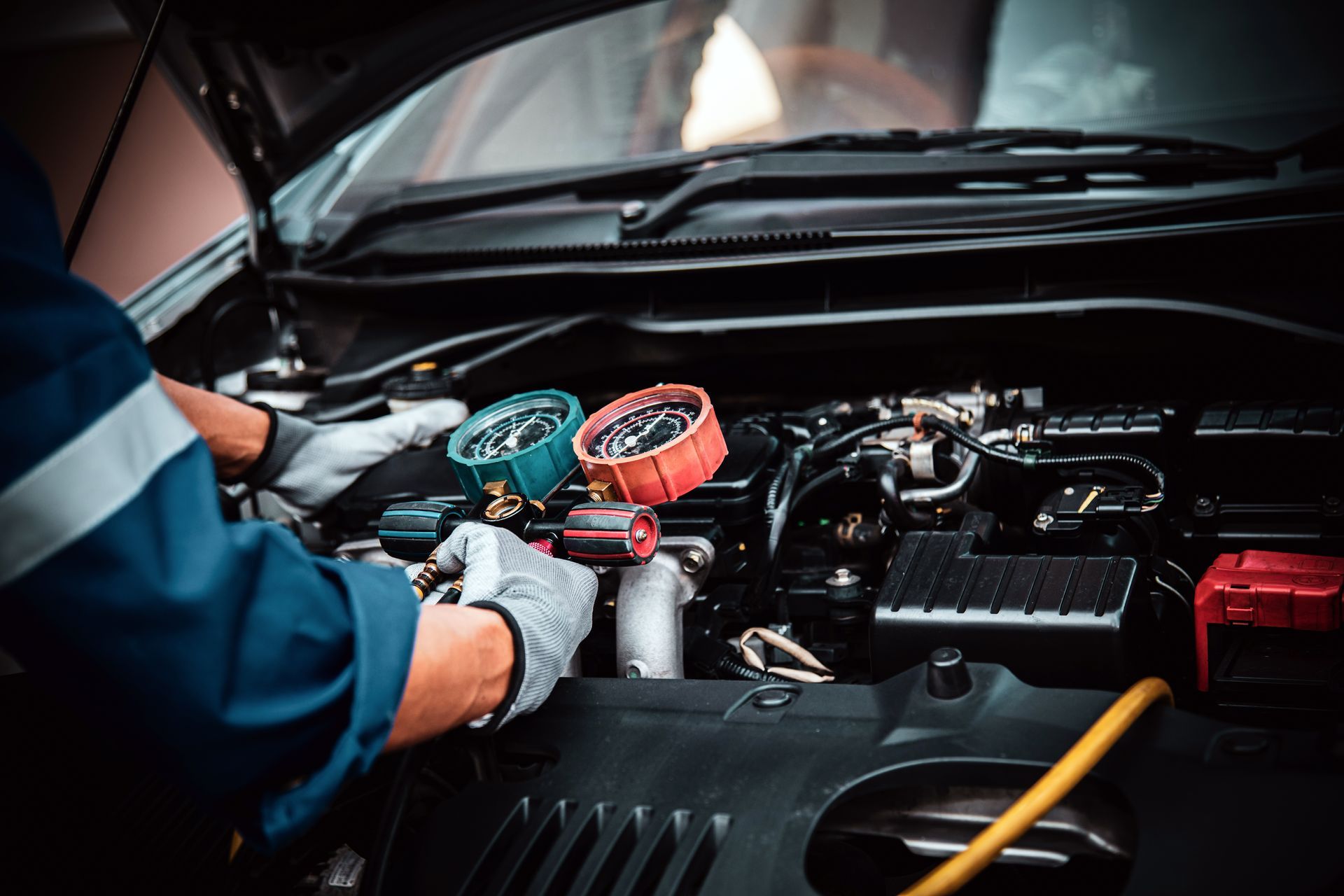
Drive with confidence knowing your Tire Pressure Monitoring System (TPMS) is in expert hands with our specialized diagnostics and repair services. Our skilled technicians utilize advanced tools and techniques to accurately diagnose and swiftly resolve TPMS issues. Trust us to keep your vehicle's tire pressure optimized for safety and performance on the road.

Quality Service with Quality Parts

We use high-quality, OEM-approved sensors and parts for all TPMS repairs and replacements to maintain the integrity and reliability of your vehicle’s monitoring system.

Quick & Efficient TPMS Services

We value your time and ensure that our TPMS services are as efficient as possible. Quick diagnostics and repairs mean you can have your system checked and any necessary adjustments made in no time, minimizing your vehicle’s downtime.

Comprehensive TPMS Services

Explore our TPMS services designed to ensure your safety and your vehicle's optimal performance:

Standard TPMS Maintenance:

Pressure Check and Adjustment:  Regular checks of tire pressure and adjustment to correct levels according to your vehicle’s recommendations. 

Sensor Battery Check:  Ensuring that sensor batteries are functioning correctly and replacing them as needed.

Advanced TPMS Solutions:

Complete System Overhaul:  In-depth overhaul of the TPMS for vehicles exhibiting recurrent issues or following significant tire or wheel modifications. 

Custom TPMS Configuration:  Custom configurations for specialized applications or after-market wheels and tires that require unique calibration settings.

Common TPMS Issues

The Tire Pressure Monitoring System (TPMS) is essential for monitoring tire pressure, but it can encounter several issues:  

  •   Sensor Battery Failure:   The batteries in TPMS sensors typically last 5 to 10 years. Battery death results in lost communication and system warnings. 
  •   Damaged Sensors:   Sensors can be damaged by road debris, improper tire service, or corrosion, leading to incorrect pressure readings. 
  •   Communication Issues:  Problems can arise if TPMS sensors don't properly communicate with the vehicle’s onboard computer, especially with non-OEM replacements. 
  •   False Alarms:  Changes in temperature can cause TPMS to issue false warnings if the system's sensitivity is too high. 
  •   System Malfunction Indicators:  The dashboard may show a malfunction indicator light due to sensor faults, receiver issues, or communication errors. 

Regular maintenance, including sensor checks and recalibration, is crucial to keep the TPMS functioning correctly and ensuring safe driving conditions.

Find TPMS Services Near You!

Locate our trusted TPMS services in your area to maintain accurate tire pressure monitoring and enhance your driving safety. Don’t overlook the importance of a functioning TPMS. Book a comprehensive TPMS service with us today and drive with peace of mind. Your safety through accurate tire monitoring is our priority—act now!

TPMS Service Frequently Asked Questions

What is TPMS, and how does it work?

TPMS stands for Tire Pressure Monitoring System. It is an electronic system that monitors the air pressure inside the tires of a vehicle. TPMS uses sensors mounted in each tire or the vehicle's wheel assembly to measure tire pressure. If the pressure drops below a certain threshold, the system alerts the driver through a warning light on the dashboard.

Why is TPMS important?

Maintaining proper tire pressure is crucial for vehicle safety, performance, and fuel efficiency. Underinflated tires can lead to decreased traction, increased stopping distances, tire wear, and the risk of blowouts. TPMS helps drivers stay informed about their tire pressure levels, allowing them to take corrective action promptly.

What are the different types of TPMS?

There are two main types of TPMS: direct TPMS and indirect TPMS. Direct TPMS uses sensors mounted inside each tire to directly measure tire pressure and transmit data to the vehicle's onboard computer. Indirect TPMS relies on the vehicle's anti-lock brake system (ABS) to monitor tire rotation speeds and detect changes in tire pressure indirectly.

How do I know if my vehicle is equipped with TPMS?

Most modern vehicles manufactured after 2007 are equipped with TPMS as a standard safety feature. You can check your vehicle's owner's manual or look for the TPMS warning light on the dashboard when you start the vehicle. If you see a TPMS symbol illuminated, your vehicle is equipped with TPMS.

What should I do if the TPMS warning light comes on?

If the TPMS warning light comes on, it indicates that one or more tires may be underinflated. Pull over to a safe location and check the tire pressure using a tire pressure gauge. Inflate the tires to the recommended pressure levels as indicated on the tire placard located on the driver's side door jamb or in the owner's manual. If the light persists after inflating the tires, there may be a malfunction in the TPMS system, and it should be inspected by a professional technician.

Can TPMS sensors be replaced if they are damaged or malfunctioning?

Yes, TPMS sensors can be replaced if they are damaged or malfunctioning. However, it's essential to ensure that the replacement sensors are compatible with your vehicle's make and model. Professional installation may be required to program the new sensors to the vehicle's TPMS system.

Do TPMS sensors need to be serviced or recalibrated?

TPMS sensors do not typically require routine maintenance. However, if you replace your tires or wheels, it's advisable to have the TPMS sensors inspected and serviced to ensure they are functioning correctly. Some vehicles may require TPMS sensor recalibration after tire rotations or replacements.

Can aftermarket wheels or tires affect TPMS functionality?

Yes, aftermarket wheels or tires can affect TPMS functionality if they are not compatible with the vehicle's TPMS system. It's essential to use TPMS-compatible wheels and tires when replacing or upgrading your vehicle's tires and wheels to ensure proper TPMS operation.

How accurate is TPMS in measuring tire pressure?

TPMS systems are designed to provide accurate tire pressure readings within a certain range. However, it's essential to regularly check tire pressure manually using a tire pressure gauge, as TPMS readings may vary slightly or be affected by factors such as temperature changes and driving conditions.

Can TPMS help improve fuel efficiency?

Maintaining proper tire pressure with the help of TPMS can contribute to improved fuel efficiency by reducing rolling resistance and minimizing energy loss due to tire underinflation. Properly inflated tires can help optimize fuel economy and reduce vehicle emissions.

Tire Pressure Problems? A&H Automotive Repair Shop Has You Covered with Expert TPMS Service.
How Do Annual Maintenance and Inspections Prevent Surprise Vehicle Breakdowns? | A&H Automotive Repa
February 27, 2026
A&H Automotive Repair Shop in Oklahoma City, OK, explains how annual maintenance and inspections can prevent surprise breakdowns.
Mechanic removing a yellow oil filter from a car engine, hands in black gloves visible.
By ahautomotive63 September 22, 2025
Regular Maintenance for a Chevrolet Vehicle At A&H Automotive in Oklahoma City, we know how much your Chevrolet means to you — whether it's a Silverado hauling for work, an Equinox for the family, or a sporty Camaro built for weekend fun. Regular maintenance not only prolongs the life of your Chevy, it also helps maintain safety, fuel efficiency, performance, and resale value. Below is a general guide to Chevrolet’s recommended service intervals and maintenance tasks, plus tips specific for drivers in OKC. Always consult your vehicle’s owner’s manual for exact requirements, since model, year, and driving conditions make a difference. Why Following the Service Schedule Matters Warranty & Resale: If you’re under warranty, skipping required services can void coverage. Also, well-documented maintenance boosts resale value. Preventative Savings : It’s much cheaper to replace worn belts or fluids than to fix a failed engine, transmission, or other major components. Performance & Efficiency : Fresh filters, correct fluids, properly inflated tires, aligned suspension — all of it helps your Chevy perform better and consume less fuel. Safety : Regular checks of brakes, steering, tires, lights & safety systems reduce risk of breakdowns or accidents. Chevrolet Mileage Milestones & What Gets Done Here’s a typical Chevrolet maintenance schedule by mileage. Depending on your model and how you drive (e.g. city vs highway vs towing, frequent short trips vs. long runs, dusty or hot conditions, etc.), you may need to adjust or do more frequent checks. Recommended Chevrolet Service Intervals Every 7,500 miles or 6–12 months Oil and filter change Tire rotation Multi-point inspection of belts, hoses, lights, and wipers Check and top off fluids (coolant, brake, power steering, transmission) Around 15,000 miles All of the above services Replace cabin air filter Flush or replace brake fluid Inspect suspension, exhaust, and cooling systems Around 30,000 miles All of the above services Inspect or replace spark plugs In-depth inspection of belts, hoses, and fuel system At 60,000 miles, 90,000 miles, and beyond Replace or inspect timing belts (if equipped) Flush and replace coolant Service transmission fluid and filters (if required) Inspect or replace shocks, struts, and steering components Test or replace spark plugs and battery as needed Special Factors for OKC Drivers Oklahoma City has its share of hot summers, dust, and large temperature shifts between day and night. These conditions can accelerate wear in some components. Here are some tips especially relevant for this area: Cooling System Care : With the heat, keep your cooling system in top shape. Flush and refill as suggested, and check radiator fins, hoses, and the thermostat regularly. Air & Cabin Filter Inspections : Because of dust and pollen, Oklahoma drivers might need to replace or inspect air filters more often. Poor air filtration affects engine breathing and HVAC performance. Tire Care : Hot pavement can increase tire wear. Rotate tires regularly, check pressure (under-inflated tires heat up more), and align as needed to avoid cupping or uneven wear. Battery Stress : Heat stresses batteries. If your battery is older (3–5 years), have it tested during regular service intervals. When to See A&H Automotive If you notice any of the following, don’t wait for your mileage to reach the next service interval — bring your Chevy in right away: Oil leaks or burning oil smell Check Engine light comes on Car pulls to one side, vibrations, or uneven tire wear Brakes feel weak, squeal, or you hear grinding Overheating, strange noises, or loss of power Here at A&H Automotive , we offer full maintenance services, OEM or equivalent parts, certified technicians, and service reminders. We also provide estimates so you know what to expect. Keeping up with these milestones saves you money in the long run. Final Thoughts Maintenance isn’t just about “following rules.” It’s about protecting your investment. Your Chevrolet can give you many years of reliable service — but only if you take care of it. By following these service intervals, understanding your driving conditions, and catching small issues before they become big ones, you’ll enjoy better performance, fewer surprises, and more peace of mind. If you’re ready to check your maintenance status, or if you think you may be overdue for a service, stop by A&H Automotive or give us a call. We’d be glad to help you get back on schedule.
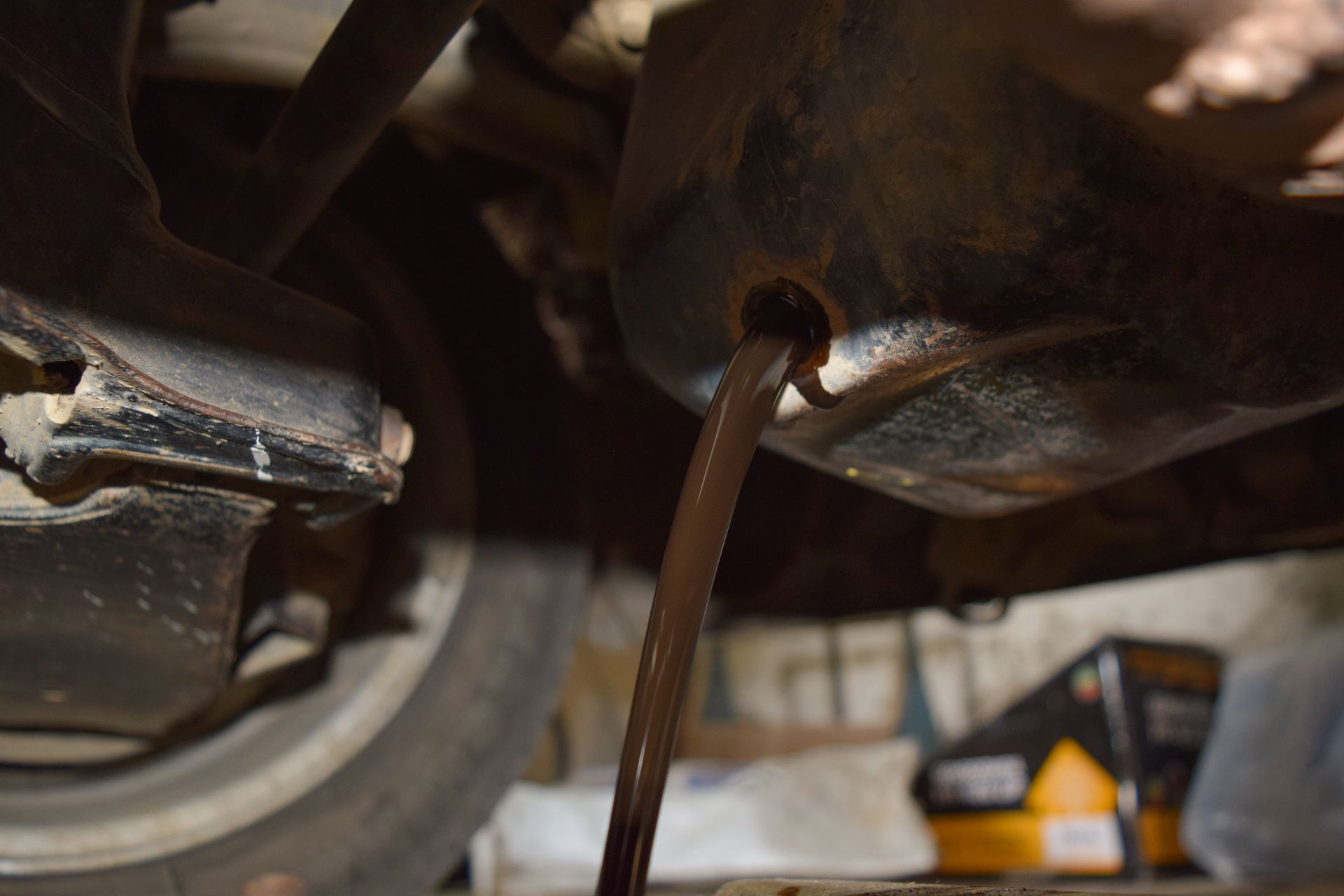
Motor oil pouring from a container into a black receptacle, set in an engine bay.
By ahautomotive63 July 11, 2025
Oil Leak Repair and Diagnosis in Del City, OK Noticing oil stains in your driveway or a burning smell from under the hood? These are warning signs that your vehicle may have an oil leak—and ignoring it can lead to major engine trouble. At A & H Automotive in Del City, OK, we provide fast, affordable oil leak diagnostics and repairs you can trust. Fast, Reliable Oil Leak Repairs in Del City When your engine loses oil, it also loses the ability to lubricate, cool, and protect itself. Even small leaks can turn into serious problems if left untreated. That’s why drivers across Del City and the Oklahoma City metro area count on A & H Automotive for: Accurate oil leak detection Transparent repair estimates Fast turnaround times Service for all vehicle makes and models ASE-certified technicians From valve cover gaskets to rear main seals, we fix oil leaks the right way—so you don’t have to worry about repeat visits. Signs Your Car Has an Oil Leak Searching for “oil leak repair near me”? Here are some red flags that mean it’s time to bring your vehicle in: Oil spots under your car Burning oil smell while driving Low oil warning light or dipstick reading Smoke from the engine or exhaust Engine running hotter than usual Acting fast can save you thousands in engine damage. Don’t wait—get it checked today. What Causes Engine Oil Leaks? Oil leaks can come from several places depending on your engine's age and condition. At A & H Automotive, our team uses pressure testing and UV dye to pinpoint the exact source of the leak and recommend the proper fix. Common oil leak sources we repair include: Valve cover gaskets Oil pan gaskets Rear main seals Timing cover gaskets Camshaft and crankshaft seals Oil filter housing gaskets Oil cooler lines and fittings Why Choose A & H Automotive? ✅ Family-owned and operated in Del City ✅ Honest, upfront pricing ✅ Quick service without cutting corners ✅ Experienced with domestic & import vehicles ✅ Proudly serving Del City & Oklahoma City We’ve built our reputation on doing things the right way—not the easy way. When you choose A & H Automotive, you’re choosing peace of mind. Schedule Oil Leak Repair in Del City, OK If you suspect your vehicle has an oil leak, don’t wait for engine damage to set in. Book your oil leak inspection with A & H Automotive today. Call us or schedule online . We proudly serve Del City, Midwest City, Moore, and the greater Oklahoma City area. Related Blog Posts Coming Soon Want to learn more about oil leaks? We’re working on helpful resources you can read next: [Why BMWs Are Prone to Oil Leaks] [How to Spot a Rear Main Seal Leak] [Common Oil Leak Causes by Mileage] [What Happens If You Ignore an Oil Leak?] [What’s the Difference Between Valve Cover and Oil Pan Leaks?] These blogs will help you understand the problem—and how we can fix it.

Featured Blogs & News